| | | | | | | | | | | | | | | | | | | | | | | | | | | | | | | | | | Kia ora tātoua
Rural Communities Deserve Better Safeguards
I have been following the media reports about the challenges facing primary care and rural hospital services in the Dannevirke, Pāhiatua and Levin areas with deep concern.
While I am not in a position to comment on the specific circumstances of any individual organisation, the situation raises important questions for the health and wellbeing of rural communities that extend well beyond one provider or one community. As primary care delivery models continue to evolve, it is important to consider whether current planning, funding, commissioning and accountability arrangements are delivering the level of local responsiveness and outcomes that rural communities expect and deserve.
What has been reported publicly is the resignation of significant numbers of clinical staff from a number of rural practices based on concerns about workload and workforce pressures. This has rightly led to growing anxiety within local communities about their ability to access timely healthcare. Community meetings have reportedly been held across the Tararua and Horowhenua districts, to seek assurances that appropriate services will remain available, while Health NZ, PHOs and providers work through the situation.
In this case the resignations relate to staff working in practices owned by one provider operating a number of practices, both urban and rural, across a wide geographical area of New Zealand. In each of those areas there are multiple PHOs, and practices are able to choose their PHO based on ‘perceived value’ offered. At HTRHN we are concerned that these factors are highlighting issues that are leading to detrimental outcomes for those people living in rural areas.
Regardless of the details of any particular case, the consequences of service disruption on this scale are far greater in rural New Zealand. Many people who access healthcare in Dannevirke and Pahiatua already travel an hour or more to reach those services – a reality that is shared by rural communities across the country. When local services become constrained or unstable, there is often no alternative provider within a reasonable distance. The result is longer travel times, higher costs, time away from work and family, and, for some, the difficult decision to delay seeking care or not seek it at all.
Our concern is first and foremost for the rural patients and whānau who depend on these services and have every right to expect timely access to quality healthcare close to home. We are equally concerned for the health professionals working on the frontline. No clinician should be expected to carry unsafe levels of workload or work within a system stretched beyond its limits. When experienced and committed health professionals feel compelled to leave because they can no longer provide the standard of care their patients deserve, it should be seen for what it is: a warning sign that the system is under significant strain and that rural communities are being placed at risk.
The events reported in recent weeks also prompt some uncomfortable but necessary questions:
· How does the health system identify when access to high-quality health care is beginning to deteriorate? · What mechanisms are in place to signal declining workforce capacity before a community reaches crisis point? · Who is responsible for intervening when these warning signs emerge? · How long should capitation and other funding streams continue to flow to a practice owner when the service levels are not being delivered? · If other practices can fill the void of service delivery, how can they be funded appropriately for the upscaling of services without affecting the patient pocket? · And most importantly, who is accountable for ensuring rural communities receive the level of service that public funding is intended to support?
These questions go to the heart of whether our health system has effective safeguards in place to protect rural communities when services come under strain.
Many of the measures traditionally used to assess performance focus on clinical and operational indicators. However, from a rural patient's perspective, some of the most important measures are much simpler:
· Can I enrol with a practice reasonably close to where I live? · Can I get an appointment when I need one? · Can I afford to get to the clinic and pay their charges? · Is there a competent and stable workforce providing care in my community? · Can I see a clinician who knows me and my health history?
The recent introduction of Health NZ's Primary Care Quality and Performance Framework (QPF) makes these questions even more pertinent. While the framework includes important measures, targets around immunisation levels, smoking cessation referrals and an online booking portal do not measure a patient-centric primary care service. The experience in Tararua highlights the need for stronger focus on what matters most to rural communities: access to care, workforce capacity, continuity of care and patient experience.
The ability of PHOs to monitor the quality of primary care delivery by their practices, hold practices to delivery standards and to put in place public health programmes across a region, are undermined if practices can easily change PHOs. Where is the accountability in the system for that regional population over multi PHOs?
The reality is that by the time communities are holding public meetings about access to healthcare, the warning signs have already been present for some time and opportunities for early intervention have been missed.
For the sake of rural communities across New Zealand, we urgently need clear policy settings and accountability measures. This should include:
· A clear Government policy supporting locality-based PHOs and local accountability. · Stronger accountability for access to, and quality of, primary healthcare services. · Performance frameworks that meaningfully measure patient access, experience and continuity of care. · Better monitoring of workforce capacity and service sustainability. · Earlier intervention when warning signs emerge. · Clear responsibility for addressing service issues before communities are left without adequate access to care.
We also need to ask a fundamental question:
Are current funding, commissioning and contracting arrangements delivering the local accountability that rural communities deserve? Decision-makers must remain connected to the communities affected by their decisions. Rural health services should be planned with communities, informed by communities, and responsive to local needs before pressures become crises.
An observation is that the further that decision-makers sit from the rural communities they are supposed to serve, practice-owners, PHO leads and HNZ staff, the quality and timeliness of important decisions deteriorates.
Ultimately, no accountability framework can overcome a workforce shortage. New Zealand needs a comprehensive rural workforce strategy and funding that properly reflects the realities and costs of delivering healthcare in rural and remote communities.
What the people of Tararua are asking for is not unreasonable. They are asking for what should be a fundamental right for all New Zealanders: safe, sustainable and accessible healthcare as close to home as possible.
As we approach the upcoming Pre-Election Political Panel, we look forward to hearing which parties are prepared to address these longstanding challenges and commit to strengthening the systems that rural communities depend upon. Mauri ora Grant | | | | | | | | | | | | | | | | | | | | | | | | Election Manifesto and Pre-Election Political Panel | |
Hauora Taiwhenua Rural Health Network has released its 2026 Election Manifesto, calling on every political party to commit to six priorities for the health of rural New Zealand ahead of the 7 November General Election.
The six commitments focus on rural voices, workforce, clinical scope, funding, digital technology, and investment in rural health knowledge and evidence.
The six commitments are: 1. Ensure rural voices shape health policy and system change 2. Grow and sustain the rural health workforce 3. Recognise the broad clinical skills needed to provide care in rural communities 4. Fund the higher costs of delivering healthcare in rural communities 5. Harness digital technology to strengthen rural health services 6. Invest in rural health knowledge and evidence
Hauora Taiwhenua Chief Executive Dr Grant Davidson says the direction is clear, but action is needed.
“These gaps in health and access to care are serious, measurable and preventable. Rural communities, iwi and health providers are already leading solutions that work. What is needed now is the policy support, investment and political commitment to sustain and expand them.”
Chairperson Dr Fiona Bolden says rural communities must be part of the decisions that shape their future.
“Rural communities know what works, but for too long decisions have been made without rural voices at the table."
The commitments are drawn from the Aotearoa New Zealand Declaration on Rural Health 2026, developed through national and international collaboration at the 21st WONCA World Rural Health Conference. | |
And now, we’re putting the commitments to the political parties.
Hauora Taiwhenua will bring political representatives together for a Rural Health Political Panel, where they will be asked how their parties would support better health outcomes and access to care for rural New Zealand.
Join us online to hear directly from representatives about their party’s priorities and commitments for rural communities, and to put your questions to the panel.
Monday 12 October 2026, 6.00–7.30pm Online via Zoom
We will have confirmed party representatives to share with you soon, so keep an eye out for further updates ahead of the panel.
We look forward to bringing the rural health sector together for an important conversation ahead of Election Day on 7 November. | | | | | | | | | | | | Applications open for Hauora Taiwhenua Rural Health Student Research Scholarship and Hauora Taiwhenua Rural Secondary School Leavers Health Career Scholarships 2026 | | Hauora Taiwhenua Rural Health Student Research Scholarship | |
Are you currently enrolled in a health-related discipline and passionate about making a difference in rural communities?
Hauora Taiwhenua Rural Health Network is pleased to invite applications for one 2026 Rural Health Student Research Scholarship, valued at $7,500 to assist with living expenses and discretionary costs. This scholarship supports a 12-week elective or research placement in a rural New Zealand community of your choice.
Scholarship Criteria: • Applications are open to New Zealand tertiary students enrolled in a health discipline • Research supervision to be provided by the applicant’s tertiary institution (or equivalent), at no cost to Hauora Taiwhenua Rural Health Network • The successful candidate will be required to present their findings to Hauora Taiwhenua Rural Health Network. This could be in a publication and/or presentation at a rural health conference or similar event
Application Process:
To apply, please submit your CV and a cover letter to Robyn Fell, Hauora Taiwhenua Rural Health Network Operations Manager, at robyn.fell@htrhn.org.nz. Your cover letter should include: Your current enrolment status – institution and year of study Intended use of the scholarship, including your proposed research question(s) Any additional supporting information Name and affiliation of your proposed research supervisor Applications close 6th November, 2026.
Term and Conditions The successful applicant must be willing to participate in an interview with Hauora Taiwhenua Rural Health Network, which may be used to develop promotional content such as a media release, case study, or feature story. By submitting your application, you consent to being contacted for promotional purposes if selected. Hauora Taiwhenua Rural Health Network reserves the right to promote the scholarship and its recipient via social media and internal communication platforms. | | | | Hauora Taiwhenua Rural Secondary School Leavers Health Career Scholarships 2026 | |
Hauora Taiwhenua Rural Health Network is pleased to open applications for the 2026 Rural New Zealand Health Scholarships, in association with Mobile Health Group, Waitaha Primary Health and the Townshend-Thomas Charitable Community Trust, providing financial support for rural students embarking on health studies in 2027.
This year, we are offering five scholarships valued at $5,000 each to support rural youth entering their first year of full-time undergraduate study in nursing, medicine, or allied health in 2027 across New Zealand universities, polytechnics, or private training establishments (PTEs). In addition, we are delighted to feature a dedicated scholarship specifically for a student graduating from Hauraki Plains College, proudly funded by the Townshend-Thomas Charitable Community Trust.
Addressing workforce shortages across rural medicine, nursing, and allied health requires a multi-faceted approach. While international recruitment and national workforce initiatives play a key role, providing financial backing to rural students who are passionate about health careers is a vital piece of the puzzle. The initiative aims to reduce barriers and foster long-term investment in the rural health workforce, with a focus on encouraging students to return and serve their communities.
We know that taking the leap into tertiary education often comes with additional costs for rural youth. Moving away from home means navigating significant travel, relocation, and living expenses on top of course fees.
Our joint scholarship initiative is designed to help ease that initial financial transition. By reducing those first-year barriers, we hope to encourage ambitious rural students to pursue their health career aspirations and build a strong foundation for their future in the health sector.
The closing date for applications is 27 November 2026. For more information on how to apply and the eligibility criteria, see the scholarship information and guidelines here. | | | | | |
Tēnā koutou katoa,
I have recently left the role of Health Services Manager in Kaikōura but continue to be active in my community particularly in the health space and will continue to advocate for rural voice at every opportunity.
Living and working rurally I have come to see first-hand some of the inequities that face rural health services and rural people, especially rural Māori. Workforce is a huge part of the lack of accessibility. Growing our own is an important way that we can work towards ensuring that our services can be well staffed to deliver the care needed. To do that we need to look at all the professions and see what can be studied closer to home and expand that ability to study online with block courses and placements as needed. I bet each of you is thinking of someone you know who would be great doing occupational therapy, nursing, or other professions if they could study locally/online mostly. I have just such a person in my mind as I write this. Kaikōura is her whenua and all her whānau live there. Moving away is not an option for her even for a few years. How do we enable education for the people who know their communities and want to work in them to provide the best possible care? Well, it is election time so we can ask lots of questions of the political parties about how they would address this! I encourage you to take every opportunity to speak to politicians at this time, attend panels and make your voice heard on behalf of your communities.
Health is always one of the biggest hot potatoes at election time. The desire to attract voters is one all political parties aspire to win, and health is one of the key areas where voters can be won or lost. It has always seemed a shame to me that health and education, two of the most important portfolios, are at the whim of governments. With each change of government comes a change of policy direction which health staff across the board, from Ministry to local services, are expected to adapt to. Wouldn’t it be great of political parties were motivated to work together and agree on pan party policies for health and education? Imagine a world where health policy was based on what was best for people and influenced by all voices, not just the politicians or those with the loudest voices. I know it is a reach to imagine this, and many will disagree with me and say we need the challenges brought by the electoral system to ensure robust thought and conversation. It is a catch 22! It is a good thing in this environment in which political parties drive health policy that Hauora Taiwhenua exists to advocate for all rural voices.
Ultimately, rural health must be shaped by the people who live, work and care in rural communities. If we want equitable access, a strong workforce and services that genuinely meet local needs, we need long-term thinking, practical education pathways, and a commitment to listening to rural voices, including rural Māori. Hauora Taiwhenua has an important role in keeping those voices visible, and this election period is a timely opportunity for all of us to speak up for the future of rural health. | | | | | | Call for Abstracts is now officially open for the NRHC 2027! | | | |
We’re excited to announce that the Call for Abstracts is now officially open for the National Rural Health Conference 2027!
Taking place in Ōtautahi Christchurch from 29 April–1 May 2027, NRHC27 will bring together rural health professionals, researchers, communities, Māori and Indigenous leaders, and health sector partners to share knowledge, celebrate innovation and explore practical solutions for a more equitable rural health system.
Under the conference theme Rural Health Equity through Empowering Primary Care Teams, we invite you to submit an abstract showcasing your mahi - whether it’s research, clinical practice, community-led initiatives, workforce solutions, innovation or new models of care.
Key Information: Call for Abstracts opens: NOW OPEN
Submissions close: Friday 30 October 2026 Notification of acceptance: From Monday 14 December 2026
The programme will feature a range of presentation formats, including 20-minute oral presentations, lightning talks, workshops and electronic posters.
Abstracts can align with one or more of our five conference sub-themes: - Whiria te Tangata - Weaving Stronger Rural Primary Care Teams
- Te Ara ki Te Hauora - Community-led Solutions for Rural Equity
- Kia Tupu te Kākano - Growing and Sustaining the Rural Health Workforce
- Mātauranga ki Mua - Knowledge, Innovation, AI and Digital Futures
- He Oranga Whenua, He Oranga Tangata, He Oranga Hapori - Thriving People, Thriving Places, Thriving Communities
For full submission guidelines, presentation categories and key dates, click the button below: nationalruralhealthconference.org.nz/call-for-abstracts
This is an opportunity to share your knowledge, evidence and experience with the rural health community and help shape the future of rural healthcare in Aotearoa New Zealand. | | | | | | We’re finalists at The Bizzies! | | | |
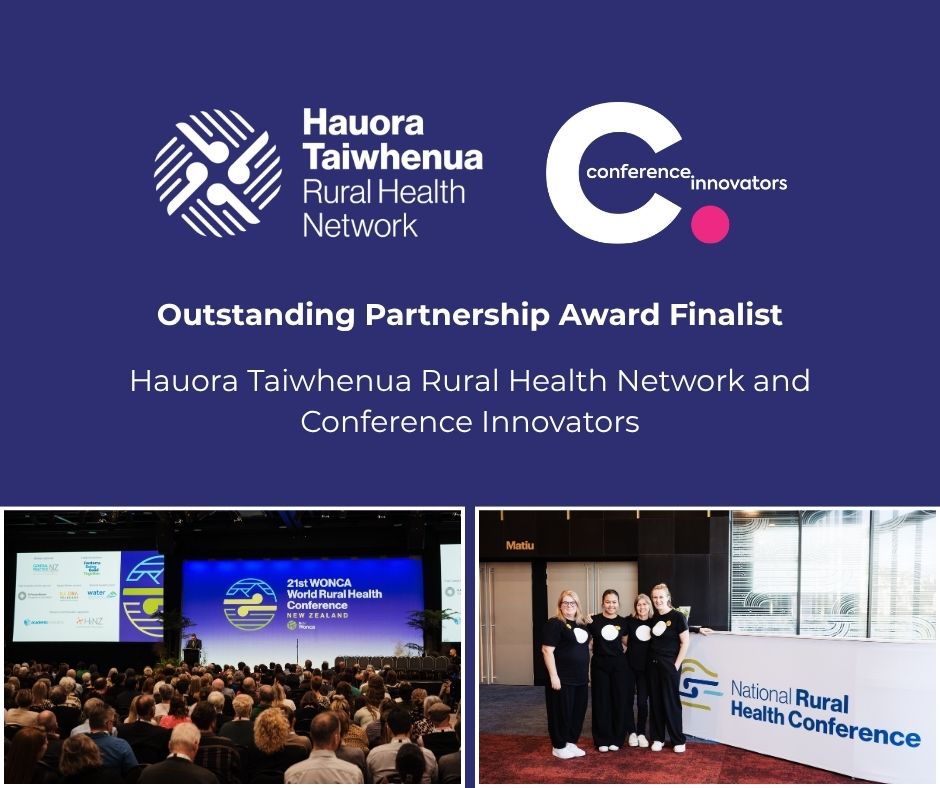
We’re proud to have been named a finalist in the Outstanding Partnership Award category at The Bizzies, Aotearoa’s Business Awards.
We’ve been fortunate to have Conference Innovators alongside us in delivering our conferences over a number of years. Their ongoing support, expertise and understanding of what we are trying to achieve has been invaluable, particularly with coordinating the international rural family doctor conference, Rural WONCA 2026. It’s a partnership that has grown over time, and we’re delighted to see the contribution of both organisations recognised through The Bizzies.
A huge congratulations to all of the 2026 finalists. It’s great to see so many organisations and teams from across Aotearoa’s business events and wider industry recognised.We’re looking forward to celebrating with everyone at Te Pae Christchurch Convention Centre on Wednesday 28 October.
Good luck to all the finalists! | | | | | | | | Expanding support for the rural health workforce | | | |
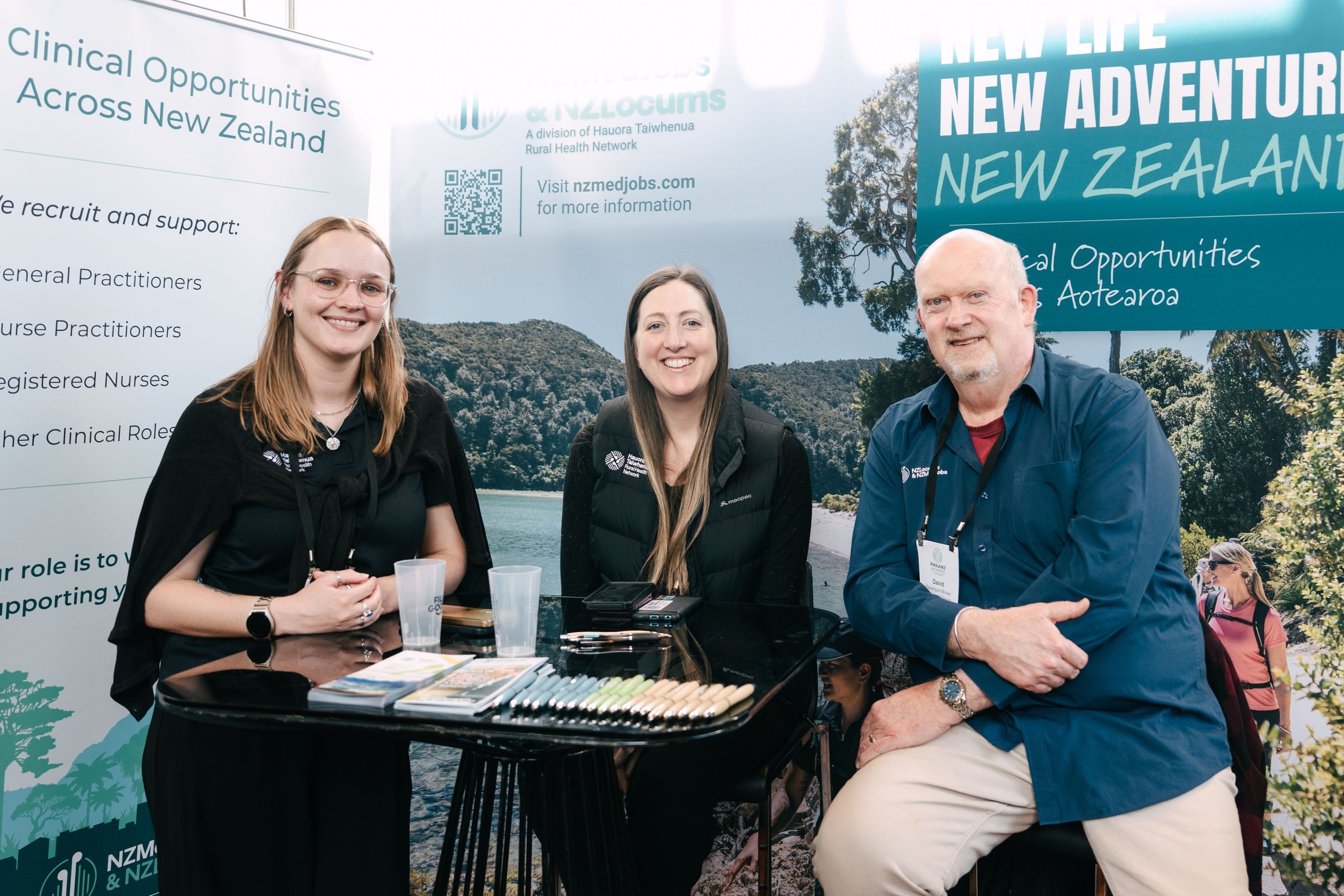
From left: Amanda Ellorey (Relationship Manager), Ingrid Busby (GM Membership Services), and David Davenport-Brown (Relationship Manager Urban) attended PMAANZ Conference in Wellington earlier this month. | | At the start of the new financial year, NZMedJobs & NZLocums began delivering expanded rural workforce recruitment support under our extended contract with Health New Zealand.
Alongside our work recruiting General Practitioners and Nurse Practitioners, we now support recruitment across the wider nursing profession. This includes registered nurses at all career stages, including graduate registered nurses and those with prescribing authority, as well as enrolled nurses.
Beyond these roles, our wider recruitment service can also help rural providers recruit: - Pharmacists
- Physician Associates
- Allied health professionals
- Other rural health professionals
This means we can help rural providers recruit across more of their multidisciplinary teams. Depending on the role and workforce need, we can work with both New Zealand-based candidates and internationally trained health professionals.
To support this growth, we have expanded our Relationship Manager team from three to four members, increasing our capacity to work directly with rural providers and health professionals.
Supporting the rural nursing workforce Registered nurses are central to rural healthcare. They assess patients, provide treatment and health education, support people with long-term conditions, and coordinate care with other services. In rural communities, nurses often work across a broad range of needs while building lasting relationships with patients and whānau. Our expanded recruitment service helps providers find nurses whose skills and experience suit the needs of their communities.
Looking for a nurse or another rural health professional? Whether your practice or rural health service has an immediate vacancy or is planning for future workforce needs, our team can help you explore your recruitment options.
Conference Attendance and Practice Visits We continue to build relationships with rural practices and the wider primary care sector. Relationship Managers Dave and Amanda recently attended the PMAANZ conference, where they heard about workforce needs and shared the recruitment support available through NZMedJobs & NZLocums.
Our team will also visit rural practices in November to meet providers and learn more about their current and future workforce requirements.
Get in touch with the NZMedJobs & NZLocums team to discuss how we can help.
Luke Baddington
General Manager, Workforce
📧 luke.baddington@nzmedjobs.com
📞 021 673 233 | | | | | | | | | | | | Better Health Together: Celebrating our Rural Allied Health Workforce, Allied Health Professions Day - 14 October Jane George and Carol Green, Rural Scientific, Technical and Allied Health Chapter Co-Chairs | | On Allied Health Professions Day, we want to take the opportunity to acknowledge and thank all the allied health, scientific and technical professionals working across rural Aotearoa.
Allied health encompasses more than 50 professions, including physiotherapy, pharmacy, occupational therapy, dietetics, radiography, speech-language therapy and social work. Each brings a different area of expertise, but together these professions are an essential part of delivering comprehensive, person-centred care.
This year’s theme, ‘Better Health Together’, highlights the importance of multidisciplinary teams and the collective contribution of different health professions to improving outcomes for rural communities.
For those working rurally, this can also mean working across broad scopes, collaborating across services and finding innovative ways to support patients and whānau when specialist services and resources may be further away.
Today, we celebrate the expertise, dedication and contribution of allied health, scientific and technical professionals, and the important role you play in keeping rural communities healthy and thriving. | | | | From classrooms to rural clinics - Waikato/Coromandel Rural School Visit Rural School Visit Volunteers, Students of Rural Health Aotearoa Chapter
| | | |
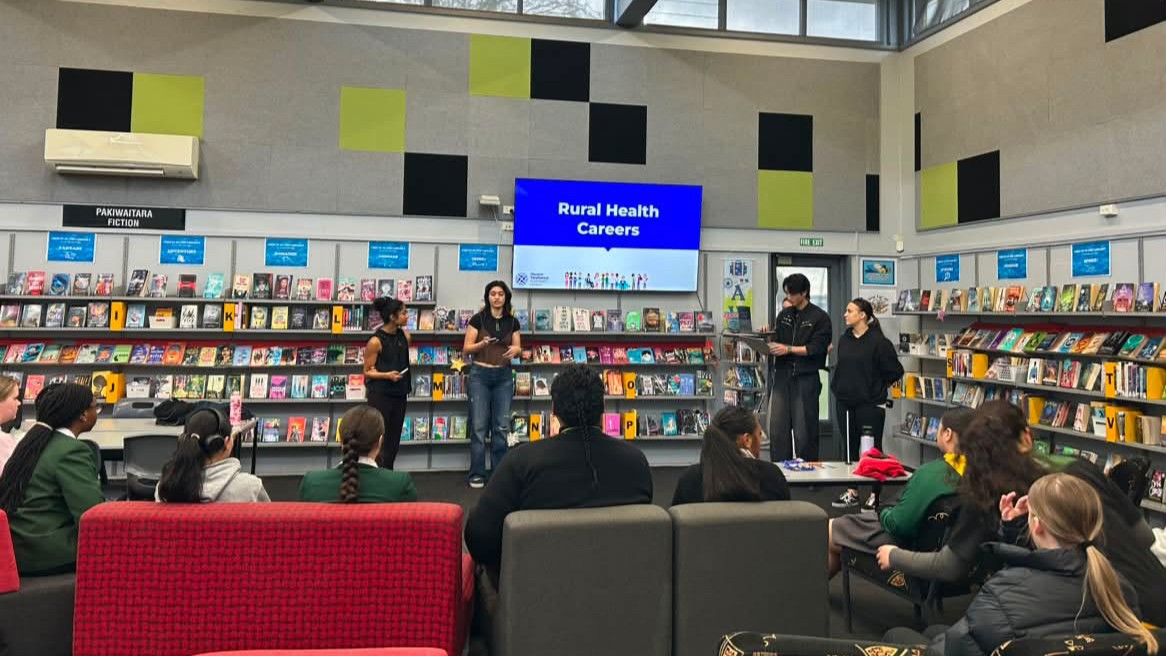
Alix Long recently joined our Rural School Visit team for a week travelling through Waikato and the Coromandel, connecting with rural tauira and sharing the range of health careers available to them.
Across visits to schools in Pukekohe, Tokoroa, Tūrangi, Whitianga and Whangamatā, the team talked with students about their aspirations, answered questions about health careers and helped make different pathways into healthcare feel more tangible. | |
The trip was also a valuable learning experience for the students themselves. Visits to rural health providers, including Tokoroa Medical Practice and Wellsprings, provided insight into innovative approaches to rural healthcare and the ways rural communities are responding to workforce and health needs.
As Alix reflects in her report, the week offered plenty of opportunities to learn beyond the classroom, from conversations with local communities and rural health professionals to seeing firsthand what a career in rural healthcare can look like. | | | | | | Helping stroke survivors stay mobile, connected and independent Jo Lambert, CEO of Stroke Aotearoa New Zealand, on supporting independence after stroke. | |
For people living in rural Aotearoa, being able to get around independently can be about much more than convenience. Distance between homes, health services, shops and community facilities can make mobility an important part of staying connected with whānau, accessing care and maintaining independence.
Stroke Aotearoa New Zealand is helping make that possible through its National Mobility Fund, with $600,000 available to support eligible stroke survivors across Aotearoa with mobility equipment.
Thanks to the generosity of the late Peter Morath, who included a gift in his will for this purpose, the fund provides support towards a mobility scooter or power chair, including assessment and delivery. Applicants are supported through an individual assessment process, delivered in partnership with Independent Living Charitable Trust, to identify the equipment that will best meet their needs.
Jo Lambert, CEO of Stroke Aotearoa New Zealand, says, “A mobility scooter or power chair can mean being able to get to the shops, attend appointments, visit friends or whānau, or simply get out of the house without having to rely on someone else. For people living rurally or further from essential services, that independence can be even more significant. It can open up their world again and help them stay connected to the people and places that matter to them.”
People living in aged residential care may also be eligible, with a clinician required to confirm that their disability and mobility needs are a result of their stroke.
Supporting people where they liveStroke Aotearoa New Zealand also has support grants available for people affected by stroke in Northland and Tauranga, made possible through generous bequests.
These grants can help with a range of practical costs, including physiotherapy, driving assessments, education and support for stroke groups, and meeting room hire.
For people living in rural and regional communities, this practical support can help reduce some of the barriers to accessing rehabilitation, information and peer support, while also supporting local stroke groups to provide connection within their communities.
“We hear time and again how much these grants can mean to people and their whānau. Sometimes it’s something as practical as helping someone access physiotherapy or complete a driving assessment, but the impact goes well beyond the immediate cost. It can help someone regain confidence, reconnect with their community and feel like they have more control over their recovery. Those seemingly small things can make a very real difference to someone’s quality of life after stroke,” says Jo.
The ability to move, connect and participate in everyday life is an important part of stroke recovery and wellbeing. By helping remove some of the financial barriers to mobility and support, these funds can make a practical difference to people and communities across Aotearoa.
If you or someone you support could benefit from the National Mobility Fund or other support available through Stroke Aotearoa New Zealand, find out more about eligibility and how to apply.
Find out more: National Mobility Fund – Stroke Aotearoa New Zealand Other grants for people affected by stroke: Grants for people affected by stroke – Stroke Aotearoa New Zealand | | | | Cyber Smart Week webinars | |
Cyber Smart Week is coming up, with a series of free webinars designed to help people better understand and manage their online security.
The Own Your Online webinar series covers a range of practical topics to help individuals and organisations stay safer online. With cyber security an increasingly important consideration for health organisations, these sessions may be useful for members and their teams.
Click Here to View the Cyber Smart Week 2026 webinar series | | | | | | Celebrating Te Wiki o te Reo Māori with Tātai Whetū | | | |
Keeping te reo Māori in our everyday lives
Following Te Wiki o te Reo Māori, we’re sharing a resource available as a member benefit to support continued learning and use of te reo Māori in everyday life and health settings.
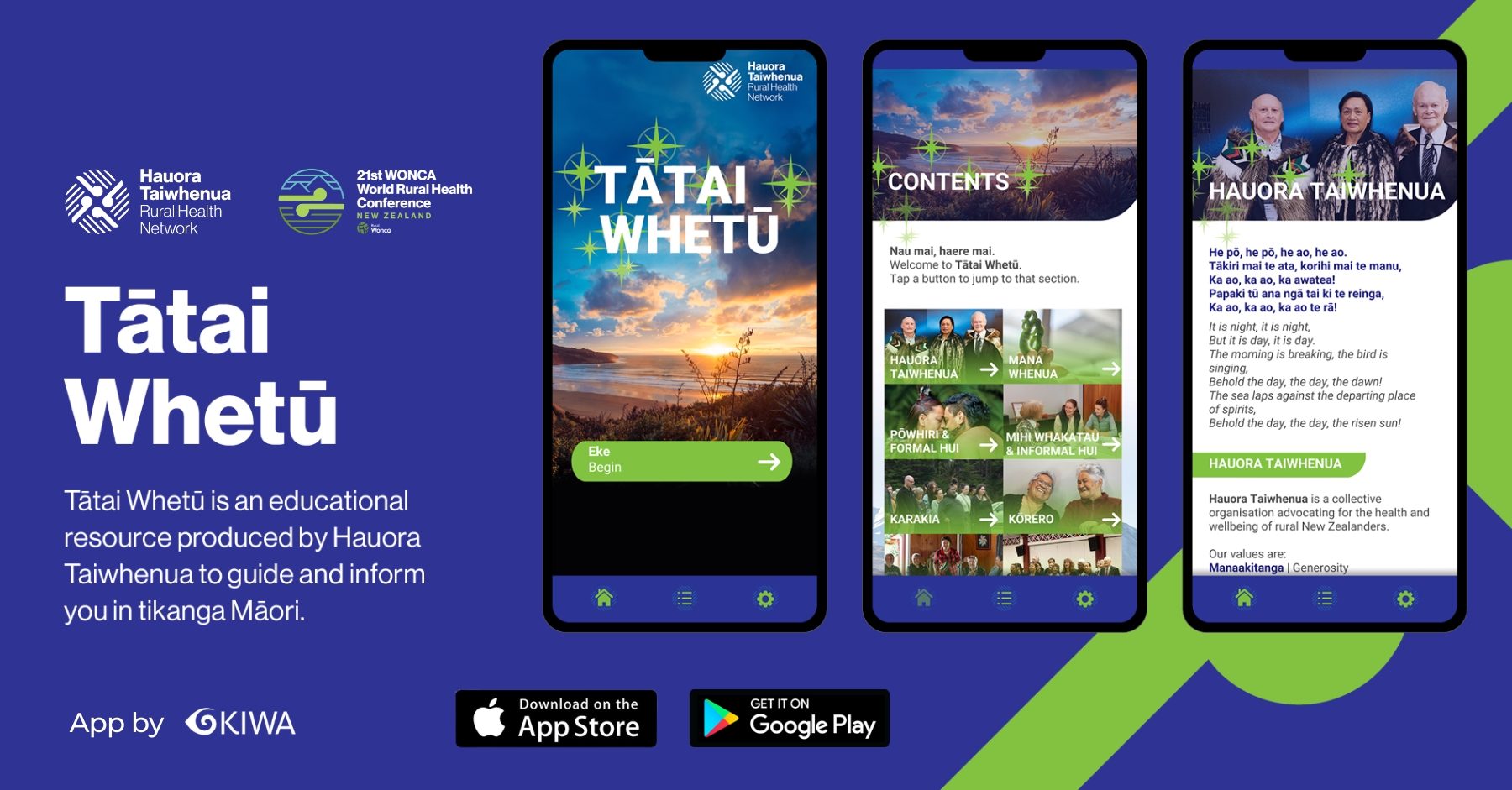
Tātai Whetū is a free, interactive app designed to support learning about te reo Māori and tikanga. It provides practical guidance across topics including pōwhiri, karakia, kōrero, pepeha, waiata and tikanga hauora, which you can explore at your own pace.
Whether you’re beginning your te reo Māori journey or looking to build on what you already know, Tātai Whetū provides an accessible place to learn, practise and build confidence.
We encourage members to explore the app and share it with colleagues and whānau as a resource that can support the ongoing use of te reo Māori in our everyday lives.
Download free today by searching 'Tātai Whetū' on the App and/or Play Store.
| | | | | | | | How Do Primary Health Care Prescribers Perceive the Implementation of 12-Month Prescribing? | | Hauora Taiwhenua member and Nurse Practitioner student Fiona Chamberlain is undertaking postgraduate nursing study through the University of Otago and is inviting GPs and Nurse Practitioners working within WellSouth, Tū Ora Compass Health and Pegasus Health PHO settings to take part in an anonymous survey.
The research explores clinicians’ perspectives on the introduction and early implementation of 12-month prescribing for eligible medicines used to treat stable long-term conditions, introduced in New Zealand on 1 February 2026.
The survey will explore the perceived benefits, challenges and practical considerations of 12-month prescribing, including its impact on patient care, clinical decision-making, workload, monitoring and safety.
The findings aim to provide an initial understanding of clinicians’ experiences and identify areas where further guidance, education or support may be useful as the policy develops.
If you are an eligible GP or Nurse Practitioner, consider taking part and contributing to this research into the early implementation of 12-month prescribing in primary care. | | | | | | Medical RiSC will be held from 19–21 October, 2026 | |
Medical RiSC is a course run by the University of Otago’s Centre for Rural Health at Ashburton Hospital (Rural Health Academic Centre). It is designed specifically for interprofessional rural hospital teams in New Zealand. It is an immersive 3 day course that focuses on emergency medical care using highly realistic skills simulations and workshops. We are inviting Rural Hospital Doctors, Nurses, Paramedics and Rural GP’s to attend and extend their clinical knowledge and skills for medical emergency management. The course will cover: - Rural airway management
- Managing the rural deteriorating patient
- Respiratory failure and ventilation
- Unwell cardiac patient
- Cardioversion & electrical pacing workshops
- Medical emergencies
- Management of shock including inotropes/vasopressors
- Thrombolysis
- Interpreting ECG’s and ABG’s
- Rural human factors, teamwork and communication
- NZ rural hospital networking and collaboration
The cost is $3,700 per Rural Hospital Doctor, $1700 per Rural General Practitioner or Nurse Practitioner, $750 per Nurse or Paramedic. We encourage you to come as an inter-professional team from your workplace if possible, however we also warmly welcome individual applicants. Medical RiSC will be held from 19–21 October, 2026. *We recognise that Nurses have limited professional development funds, so we encourage Rural Hospital Doctors to support their colleagues by extending their CME to sponsor a nurse from their hospital to attend. Accreditation RNZCGP has approved RiSC for CME points. DRHMNZ has approved RiSC to be recognized as a Tier 1 resuscitation course for Fellows of Rural Hospital Medicine. Please email tracey.reid@otago.ac.nz for general enquiries and to apply | | | | | | One Spot Available: Rural Procedural Sedation Simulation Course | |
The University of Otago’s Centre for Rural Health is running a new simulation-based course for rural practitioners of procedural sedation - SPARC (Simulated Procedural sedation and Analgesia in the Rural Context). This course is unique in that it offers simulation-based training in procedural sedation specifically for the rural context. The course includes independent online learning followed by an intensive simulation workshop spread over two half-days to allow travel to and from the course on the days it runs. It will be at a level appropriate for those with existing experience of procedural sedation or for those newly developing these skills. We’ve had someone defer their spot in our upcoming course, which has meant that we have space for one more course attendee in October (the 12th & 13th). Email centrerural@otago.ac.nz if you would like to reserve this spot for yourself. We’re also happy to answer any questions about the course in general. | | | | | | BNZ Healthcare Sector Insights Report 2026 | |
We’re pleased to share the BNZ Healthcare Sector Insights Report 2026, following our support earlier this year in sharing the survey with Hauora Taiwhenua members.
Now in its fifth year, the report provides insights into the current pressures and opportunities facing New Zealand’s healthcare sector, drawing on the perspectives of healthcare providers and people receiving care.
The 2026 report highlights workforce constraints as a leading concern for healthcare providers over the next three to five years, alongside increasing complexity of patient needs and rising operational costs. It also explores the role of technology and new approaches to healthcare delivery as the sector responds to changing demand.
Thank you to the Hauora Taiwhenua members who contributed to the survey earlier this year. We encourage members to take a look at the full report for insights relevant to the future of healthcare delivery in Aotearoa.
| | | | | | ACC annual pricing review: submissions now open | |
ACC is inviting health and rehabilitation providers, sector bodies and other interested organisations to provide input into its annual pricing review.
Submissions are now open, with ACC seeking information about the costs, pressures and conditions affecting the delivery of health and rehabilitation services across Aotearoa.
ACC is particularly interested in service-specific information, evidence, examples, case studies and financial information where appropriate that can help build an accurate picture of provider experiences and current market conditions.
This is an opportunity for rural health providers to share information about the factors affecting the delivery and sustainability of services in rural communities.
Submissions are open to contracted suppliers as well as other organisations involved in health and rehabilitation services, including sector bodies and joint submissions.
Submissions close Wednesday 4 November 2026.
Find out more about the review process, timelines and how to make a submission below: | | | | | | Connecting in Crisis - Have your say and be in to WIN! | |
Want to feel more confident talking with patients or others about suicidal thoughts?
Researchers at the University of Auckland have developed a podcast series to support healthcare professionals build the knowledge, confidence and skills needed for these important conversations.
Now we want your opinion
Listen to short podcast sound bites and complete a quick 10-minute anonymous survey to tell us: What you think of the content How useful it could be for your learning/teaching How it could better support healthcare professionals
As a thank you, you can go in the draw to WIN a $100 Prezzy voucher!
Have your say: Click the link below or scan the QR code.
Your feedback could help shape better support for healthcare professionals having conversations that matter. | | | | | | Pinnacle - Cognitive screening and older drivers Blog — by Dr Jo Scott-Jones
| | | |
Pinnacle Health has published a useful overview of recent guidance on cognitive assessment as part of older people’s driver licence medical examinations.
The blog, by Dr Jo Scott-Jones, looks at the findings of the NZ Transport Agency review and recent RNZCGP guidance, including when cognitive assessment may be appropriate and which tools may provide more relevant information when there are concerns about driving ability.
It also highlights the importance of having clear processes for escalation and reviewing practice policies in light of the updated guidance. | | | | | | Applications open for obstetrics and gynaecology study | |
Applications are now open for 2027 study in the University of Otago’s Postgraduate Diploma in Obstetrics and Medical Gynaecology (PGDipOMG) and Postgraduate Certificate in Pregnancy and Medical Gynaecology (PGCertPMG).
These programmes provide further study opportunities for health professionals looking to build their knowledge and skills in obstetrics, pregnancy and medical gynaecology.
Applications for 2027 close on 1 November 2026, with late applications considered only if places remain available. There are also a limited number of spaces available to begin studying sooner through selected distance papers in 2026. These can be completed as standalone papers towards a Certificate of Proficiency (COP), with credits able to contribute towards the Diploma or Certificate.
The four distance papers are taught online through Aoroa and include six Zoom classes and six assignments. Classes are generally held on Tuesdays from 6pm–8pm.
Interested in applying or finding out more? Visit the University of Otago programme pages below. | | | | | | | | | | | | If you have feedback for us or want to reach out to us regarding something, feel free to contact us via the details provided below.
Write an email to communications@htrhn.org.nz to get connected with our team.
| | | | | | | | | | | | | | | | | |